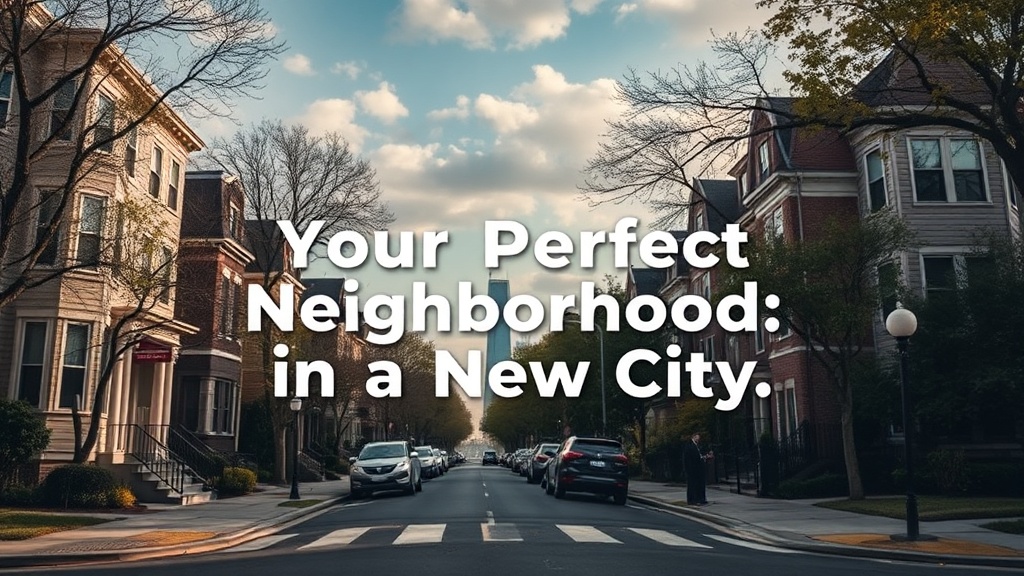
Finding Your Perfect Neighborhood in a New City

Research from the Urban Institute shows that nearly 80% of people who move to a new city report that their sense of community is tied directly to their immediate neighborhood rather than the city as a whole. Choosing where to live is about more than just finding a roof over your head; it’s about selecting the backdrop for your daily life. This guide breaks down the practical steps for identifying a neighborhood that matches your lifestyle, budget, and personal values. We’ll look at how to vet local amenities, understand transit patterns, and avoid the common pitfalls of "neighborhood gentrification" traps.
How Do I Find a Good Neighborhood?
The best way to find a good neighborhood is to layer data-driven research with physical, real-world observation.
You can't rely solely on Zillow or Redfin. Those sites show you the bones of a house, but they won't tell you if the street gets incredibly loud at 2:00 AM when the local dive bar closes. To get a real sense of a place, you need to look at the intersection of utility and vibe. Do you need a grocery store within walking distance? Or are you fine driving twenty minutes for a trip to Whole Foods?
Start by identifying your "non-negotiables." If you are a remote worker, high-speed fiber internet isn't a luxury—it's a requirement. If you are a parent, proximity to highly-rated schools is a must. Use U.S. Census Bureau data to understand the demographic shifts and economic trends in a specific area. This helps you see if a neighborhood is growing or if it's in a state of decline.
Once you have your data, get out of the car. Walk the streets at different times of the day. A street that looks charming and quiet at 11:00 AM on a Tuesday might feel desolate or even sketchy at 11:00 PM on a Saturday. (I've learned this the hard way more than once.)
The "Vibe" Checklist
Don't just guess how a place feels. Use this list to audit a neighborhood during your scouting trips:
- The Noise Factor: Is there a train line, a flight path, or a high-traffic artery nearby?
- The Lighting: Are the streetlights functional? Is the sidewalk well-lit?
- The Retail Mix: Are there local coffee shops and hardware stores, or just high-end boutiques?
- The Greenery: Is there a public park or a community garden within a 10-minute walk?
- The Transit: How often does the local bus or light rail actually show up?
What Are the Different Types of Urban Neighborhoods?
Urban areas generally fall into distinct categories: the high-density core, the established residential-suburban, and the up-and-coming fringe.
Understanding these archetypes helps you manage your expectations. You might find a "trendy" neighborhood that is actually quite expensive, or an "affordable" area that lacks any sense of walkability. It's helpful to categorize areas before you even look at a rental listing.
| Neighborhood Type | Typical Vibe | Primary Benefit | Primary Drawback |
|---|---|---|---|
| The Urban Core | Fast-paced, high-energy, dense | Walkability and nightlife | Noise and high cost |
| Established Residential | Quiet, family-oriented, stable | Safety and predictable amenities | Limited transit and higher entry price |
| The Up-and-Coming | Eclectic, gritty, high-potential | Lower rent and "cool" factor | Construction and shifting culture |
| The Transit Hub | Functional, transient, busy | Ease of commuting | High foot traffic and less privacy |
If you want to understand how a city's layout dictates these zones, look at the urban planning history of that specific city. A city built around a grid system will feel fundamentally different from a city built around winding, organic roads. This dictates everything from how long it takes to get to the gym to how much you'll pay for a delivery fee.
If you're moving to a place with a heavy transit focus, you might want to check out how to experience a city like a local to see how people actually move through these spaces.
How Much Does It Actually Cost to Live in a "Good" Neighborhood?
The cost of a neighborhood is determined by the "premium" people are willing to pay for convenience, safety, and prestige.
Don't just look at the rent or the mortgage. Look at the "hidden" costs. In a highly walkable neighborhood, you might save money by not owning a car, but you'll likely pay a premium for the small square footage. In a more suburban-style neighborhood, your rent might be lower, but the cost of gas, car maintenance, and parking can quickly eat those savings.
Here is a quick breakdown of how to calculate the true cost:
- The Rent/Mortgage Base: This is your starting point.
- The Commute Tax: Calculate the cost of fuel, tolls, or transit passes.
- The Amenity Premium: Will you be paying more for groceries or services because you're in a high-end district?
- The Lifestyle Overhead: Does the neighborhood offer free public amenities (parks, libraries) or does it require paid memberships (private gyms, clubs)?
It is also worth noting that "up-and-coming" areas often have a deceptive pricing structure. You might find a cheap studio apartment in a neighborhood that is currently being gentrified, but the local coffee shop might charge $7 for a latte because they are catering to a new demographic. Always do the math on your daily spending, not just your monthly rent.
One thing to watch for is the "amenity gap." This occurs when a neighborhood has high-end amenities (like a boutique yoga studio) but lacks basic necessities (like a reliable pharmacy or a budget-friendly grocery store). This can make living there feel expensive even if your rent is relatively low.
If you are moving to a city that stays active well into the night, your neighborhood's "cost" might also include the price of sleep. A neighborhood near a major nightlife district will always be cheaper than the quiet residential street ten blocks away, but that price difference is often a trade-off for a lack of peace and quiet.
Before you sign a lease or a mortgage, check the local municipal-level data for crime statistics and zoning changes. Many cities provide public access to these records through their official websites. Knowing if a large-scale commercial development is planned for the empty lot next door can be the difference between a great investment and a headache.
Steps
- 1
Identify Your Urban Archetype
- 2
Cross-Reference Transit Maps
- 3
Scout Local Amenities via Digital Maps
- 4
Verify Safety and Vibe via Social Media