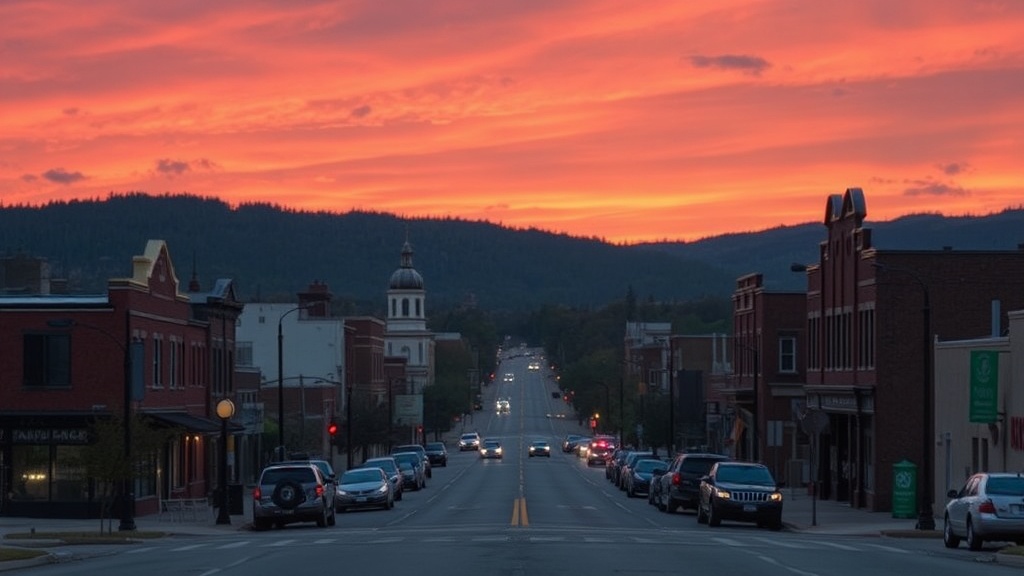
Why You Should Consider Staying in a Small Town Instead of a Major Metro

Roughly 80% of the world's population lives in urban areas, yet the most profound cultural shifts often happen in places with fewer than 50,000 residents. While major metropolises offer high-speed transit and endless nightlife, they often strip away the granular details of a place's identity. This post examines why opting for a smaller town during your next trip can provide a more grounded perspective on local culture, slower travel rhythms, and a genuine connection to a region's history.
Traveling to a massive city can feel like trying to drink from a firehose. You're bombarded by sensory input—the roar of the subway, the neon lights, the sheer density of people—which often leaves you exhausted rather than inspired. Smaller towns, by contrast, allow for a much more deliberate way of seeing the world. You aren't just passing through; you're actually present.
Is it better to visit small towns or big cities?
The answer isn't about which is "better" in a vacuum, but which serves your current mental state. If you want to see the world's most famous landmarks and experience high-end luxury, go to London or New York. But if you want to understand how a community actually functions, head to a smaller hub. In a large city, you're a spectator. In a small town, you're a guest.
Small towns offer a unique vantage point on the local economy and social structures. You see the local hardware store, the single-purpose diner, and the way people interact at the local market. This level of intimacy is impossible in a metropolis where everyone is a stranger. When you visit a smaller destination, the interactions are often more meaningful—even if they're just a quick chat with a barista who actually knows the regulars.
Consider the way culture is preserved. In major cities, culture is often a polished, commercialized version of the truth. In smaller towns, traditions are often more raw and less staged for tourists. Whether it's a local festival or a weekly market, these events feel less like a performance ands more like a way of life.
The Economic Reality of Small-Scale Travel
One of the biggest draws of smaller destinations is the cost. While it's a cliché, it's also a reality. Your money goes much further when you aren't paying a premium for the "prestige" of a metropolitan zip code. You'll find that boutique stays or local guesthouses often provide more character and warmth than a standard international hotel chain.
- Accommodation: Local B&Bs often provide more insight into the region's history than a standardized hotel.
- Dining: You'll find specialized regional cuisine that hasn't been diluted for a global palate.
- Transportation: You can often rely on walking or local bus routes rather than expensive ride-share services.
However, don't expect luxury. Small-town travel requires a certain level of adaptability. You might have to deal with limited operating hours or fewer dining options after sunset. But that's part of the charm—it forces you to sync your schedule with the rhythm of the place, rather than trying to force the place to sync with you.
Can you find authentic culture in smaller destinations?
Many travelers assume that "culture" only happens in big museums or world-class theaters. This is a mistake. Real culture—the kind that defines a people—lives in the vernacular. It's in the way a specific dish is prepared in a roadside kitchen or how a local dialect sounds in a public square.
When you visit a small town, you are witnessing a living, breathing culture that isn't trying to sell you a souvenir. For instance, if you look at the