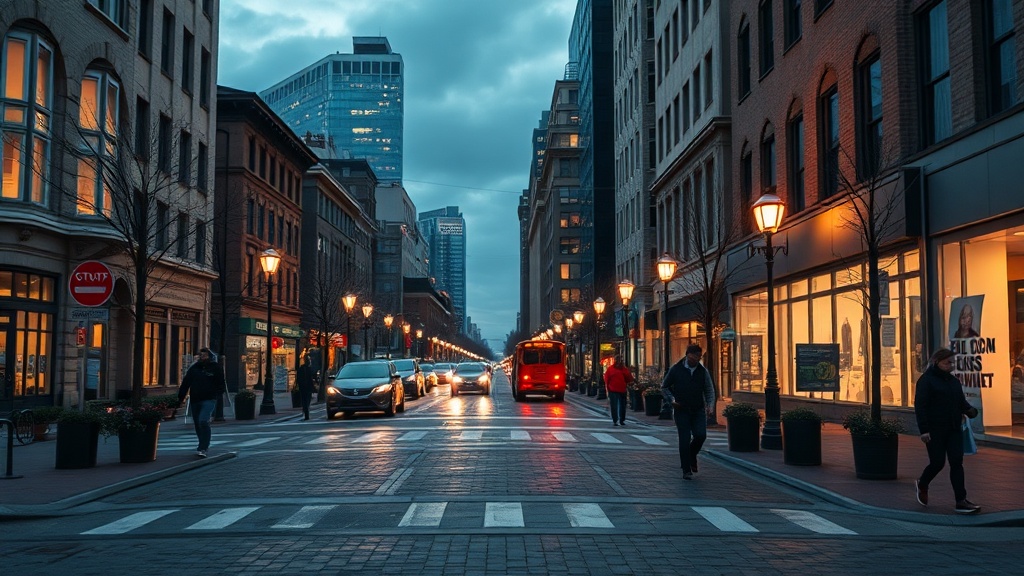
Why Walking-Friendly Urban Layouts Change How You Experience a City

The Geometry of a City's Soul
Recent studies from the National Science and Technology Center suggest that the way streets are laid out—the physical distance between a coffee shop and a subway station—dictates much more than just travel time; it dictates the actual culture of a neighborhood. When a city is built for cars, you experience it in snapshots: a drive, a parking garage, and a destination. When a city is built for feet, you experience it in layers. This post looks at the mechanics of pedestrian-centric design and how these layouts shape the way we interact with new environments.
A walkable city isn't just a collection of sidewalks; it's a psychological framework. When you can walk to a grocery store or a library, you're forced to look up. You see the architecture, you notice the seasonal changes in the trees, and you encounter the people who actually live there. This isn't a coincidence. High-density, walkable areas naturally create more "third places"—those spots that aren't home or work—where social connections happen organically. If you're planning a trip, choosing a destination with high walkability scores will fundamentally change the quality of your memories.
Can you actually feel the difference in a walkable city?
The difference is visceral. In car-centric cities, the experience is often fragmented. You spend a lot of time looking through a windshield or a glass door. In a pedestrian-friendly layout, the city feels like a continuous stream. You might start at a bookstore, walk three blocks to a small courtyard, and end up at a bistro. This flow creates a sense of discovery. You aren't just following a GPS; you're following your curiosity. This is why cities like Tokyo or Barcelona feel so much more intimate than sprawling metropolises in the American Sun Belt.
Think about the scale of interaction. A car moves too fast to notice a small, hand-painted sign for a vintage shop. A pedestrian, however, can stop on a dime. This ability to pause is what allows a traveler to move from being a spectator to a participant. You aren't just observing a city; you're existing within its rhythm. It's the difference between watching a movie and being in the scene.
Does urban density improve the travel experience?
Density is often a dirty word in modern urban planning, but for a traveler, it's a gift. High density means variety. It means that within a fifteen-minute radius, you can access different cultures, cuisines, and histories. A dense city provides a high "sensory yield" per square mile. If you're staying in a low-density area, you'll likely spend a significant portion of your budget and time on transit, which limits your ability to explore the nuances of the local culture.
Look at the data provided by Walk Score to see how different neighborhoods stack up. You'll notice that high-scoring areas often have a much higher concentration of small, independent businesses. These are the businesses that give a city its character. Large chains are easy to find anywhere, but the soul of a city lives in the narrow alleys and the side streets that aren't visible from a highway-adjacent exit.
Is it better to stay in the city center or the outskirts?
If you want to truly understand a place, the center is almost always the better bet. While the outskirts might offer more space or lower prices, you lose the ability to wander. The center is where the friction happens—and friction is where the culture is born. Friction is the person bumping into you on a crowded sidewalk, the smell of a street vendor's grill, or the sound of a street performer. These aren't distractions; they're the fabric of the city.
Consider the trade-offs. Staying in a central, walkable district might mean a smaller hotel room or a slightly higher price tag, but the ROI (return on investment) is the time you save. You won't be stuck in a rideshare for forty minutes just to get to a museum. Instead, you'll be walking through a park or a vibrant market. You're buying access to the city's heartbeat.
When you're planning your next trip, look at the street grid. Is it a grid or a sprawl? Is it designed for the movement of people or the movement of machines? The answer to that question will tell you exactly what kind of traveler you'll be in that destination. A city that invites you to walk is a city that invites you to stay a little longer and see a little more.