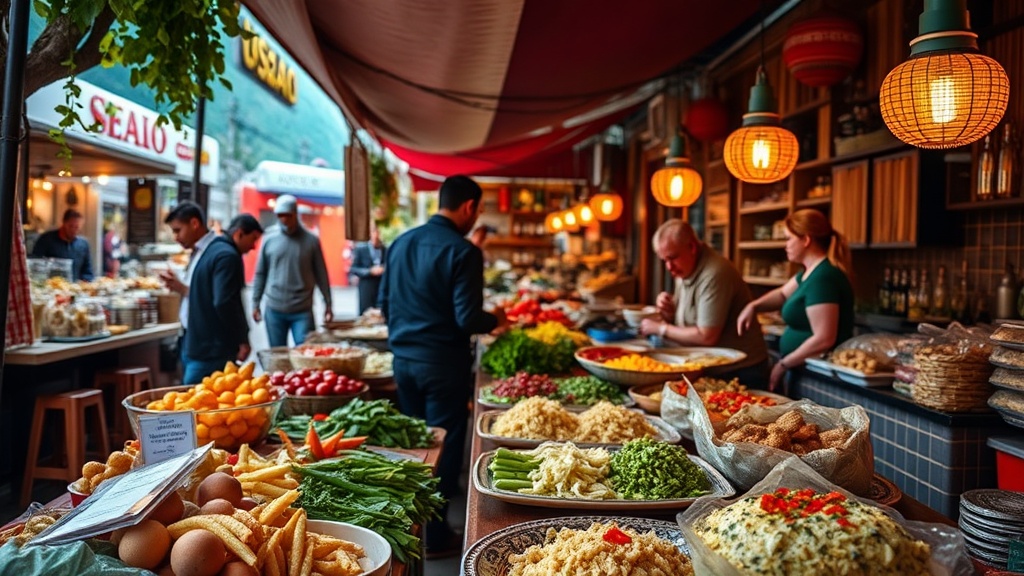
Building a Localized Food Itinerary That Avoids Tourist Traps

What Makes a Food Tour Worth the Time?
Have you ever sat in a crowded, overpriced restaurant in a major tourist district and wondered if the food actually tastes good, or if you're just paying for the view? This guide addresses the gap between eating as a tourist and eating like a local. We're looking at how to identify genuine culinary hotspots, how to avoid the "tourist tax" menus, and how to structure your daily-food-routine so you aren't constantly hungry or overspending. Food is the backbone of any city's identity—it's the most direct way to understand a culture—but if you don't have a plan, you'll likely end up at a mediocre chain restaurant just because it's the only thing open.
To eat well, you have to look past the bright neon signs and the glossy menus placed on sidewalks. Most travelers make the mistake of following the crowd, assuming that a long line means good food. While that's sometimes true, a line of tourists often just means a high marketing budget. Instead, look for the spots where the staff is eating, where the menu is small, and where the ingredients are seasonal. This approach turns a standard trip into a deep dive into a city's actual soul.
Where Should I Look for Authentic Local Eateries?
Finding the real deal requires a bit of detective work. You won't find the best food in the shadow of the largest monument in the city. Instead, look toward the residential pockets or the neighborhoods where people actually live and work. These areas offer a much higher density of high-quality, low-cost options. If you're in a city with a strong street food culture, the best meals often happen on a corner, not in a seated dining room.
One effective way to find these spots is to look for specialized menus. A restaurant that only does one or two things—like a specific type of noodle, a certain roast, or a specific regional pastry—is usually a sign of quality. When a kitchen focuses on a narrow scope, they have more time to perfect their technique. You can use resources like Eater to see which establishments are getting legitimate professional attention, rather than just social media hype. This helps you distinguish between a "viral" spot and a legendary one.
- Check the Menu Size: A massive menu often means mediocre ingredients and a lack of focus.
- Watch the Local Crowd: If the lunch rush is full of people in work clothes, you've found a winner.
- Look for Regionality: Does the restaurant highlight ingredients from the surrounding area? If so, the food is likely fresher.
Another tip is to follow the scent. It sounds old-fashioned, but in many cities, the aroma of roasting spices or fresh bread is a more reliable indicator of quality than a Yelp rating. If a street smells incredible, it's because something is actually happening in that kitchen. This is especially true in dense urban centers where ventilation can carry the scent of a good meal for blocks.
How Do I Budget for a High-Quality Food Experience?
Many people assume that eating well requires a massive budget, but that's rarely the case. In fact, some of the best culinary experiences on the planet are incredibly cheap. The trick is to balance your spending. You don't need to eat at a Michelin-starred restaurant for every meal to have an incredible time. A smart strategy is to eat your most expensive meal of the day at lunch. Many high-end establishments offer a "prix fixe" or set menu during lunch hours that is significantly cheaper than their dinner service.
<By saving your budget during the midday hours, you can afford to splurge on a nicer dinner or a specialized tasting menu later in the evening. This keeps your daily spending predictable and prevents that end-of-trip financial exhaustion. You can also look for local markets or food halls. These spaces allow you to sample a variety of different cuisines from a single location without the commitment of a full sit-down service. It's a great way to test-drive different flavors before deciding where to spend more money later.
| Meal Type | Budget Option | Premium Option |
|---|---|---|
| Breakfast | Local Bakery/Coffee Shop | Hotel Brunch |
| Lunch | Street Food/Food Hall | Mid-range Bistro |
| Dinner | Neighborhood Eatery | Fine Dining/Specialty Restaurant |
If you want to see how different cities structure their dining scenes, checking the Michelin Guide can give you a sense of the high-end benchmarks, even if you don't intend to dine there every night. It provides a baseline for what the absolute best looks like, which helps you understand the hierarchy of the local food scene.
Can I Find Good Food Without a Reservation?
The answer depends heavily on the city and the time of day. In many major hubs, trying to walk into a popular spot at 7:00 PM without a booking is a recipe for frustration. However, if you are willing to eat earlier or later than the standard peak hours, you can often snag a seat. The "second seating" is a great way to experience a busy restaurant without the stress. Most places have a turnover around 8:30 PM or 9:00 PM, which can be a perfect time to find an open table.
If you're traveling solo or in a small group, you have a massive advantage. Many restaurants hold a few seats specifically for single diners or pairs at the bar or at smaller tables. This is a great way to observe the kitchen in action while enjoying a full meal. It also makes it easier to get a seat in places that are otherwise booked out weeks in advance. Just be prepared to be a bit more flexible with your timing. If you're willing to eat at 5:30 PM or 10:00 PM, you'll find that the city's best spots are much more accessible.
Ultimately, the goal isn't just to fill your stomach, but to use food as a tool for wayfinding. Every dish tells a story about the climate, the history, and the people of the city. Whether it's a simple bowl of noodles in a crowded alley or a complex multi-course meal in a quiet courtyard, pay attention to the details. That's where the real travel happens.