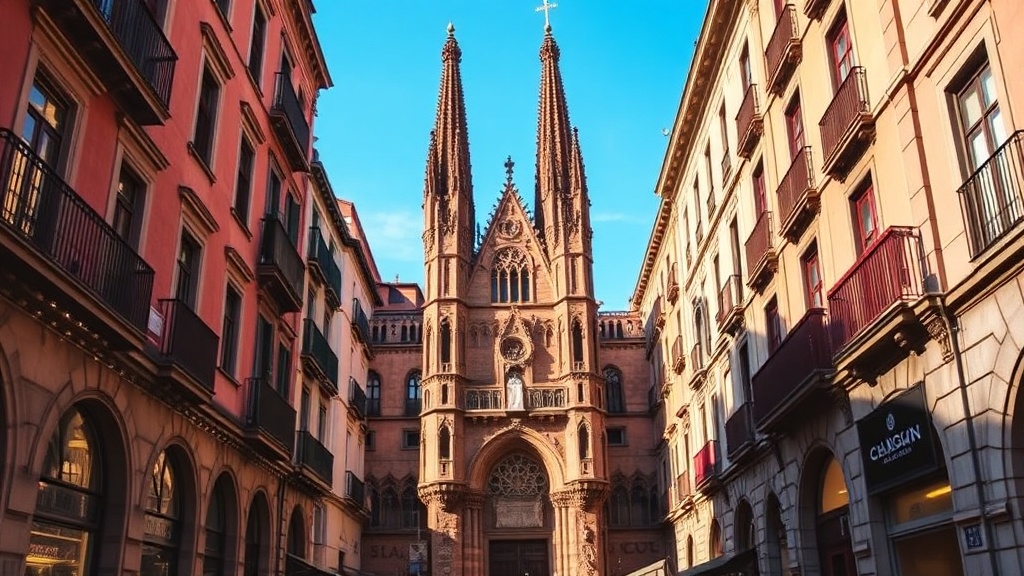
A First-Timer's Guide to Barcelona's Gothic Quarter

This guide covers everything you need to know for a first visit to Barcelona's Gothic Quarter—from the must-see Roman ruins and hidden squares to the best tapas bars and crowd-avoidance tactics. The Barri Gòtic rewards preparation. Without it, you'll wander beautiful streets but miss the stories behind them. With a loose plan, you'll eat better, walk smarter, and actually understand what you're looking at.
What is the Gothic Quarter in Barcelona known for?
The Gothic Quarter is the historic heart of Old Barcelona, a dense maze of narrow streets that stretches from La Rambla down to the port and up toward Via Laietana. It's known for its layered history—Roman walls stand next to medieval cathedrals, and modernist street lamps hang above cobblestones laid centuries ago. This is where the city began.
Most visitors come for the architecture. The neighborhood packs in Gothic churches, hidden plazas, and the remnants of a Roman temple into a space you can cross in twenty minutes. That said, the real appeal isn't any single monument. It's the atmosphere—the sudden quiet when you turn off a busy avenue into a medieval alley, the smell of coffee from a bar that's been open since 1786, the way afternoon light hits the Barcelona Cathedral's facade just before golden hour.
The quarter also contains El Call, one of Europe's oldest Jewish quarters. Small and easy to miss, these streets hold a complex history of commerce, persecution, and preservation. The Museu d'Història de Barcelona (MUHBA) does an excellent job of explaining this layered past through underground excavations you can walk through yourself. You'll see wine-making facilities, ancient laundry structures, and the foundations of homes that stood here when the city was still called Barcino.
What are the must-see sights in Barcelona's Gothic Quarter?
You can't miss the Barcelona Cathedral, the MUHBA, Plaça Reial, and the Roman walls—but the best moments often happen in the smaller spaces between them. Here's how to prioritize a first visit without rushing from one queue to the next.
The Barcelona Cathedral (Catedral de la Santa Creu i Santa Eulàlia) dominates the neighborhood's skyline. Built between the 13th and 15th centuries, it's a Gothic masterpiece with a cloister famous for its thirteen white geese—one for each year of Saint Eulàlia's life. The rooftop offers views over the old city. (Arrive early. By 11 a.m., the square in front fills with tour groups.)
From the cathedral, walk down Carrer del Bisbe. You'll pass the ornate neo-Gothic bridge connecting the Palau de la Generalitat with the Casa dels Canonges. It's perhaps the most photographed street in the quarter—and for good reason. The catch? Everyone knows it. Snap your photo, then turn down a side street before the crowds catch up.
Plaça Reial is worth a stop, especially in the evening. Designed by Francesc Daniel Molina in the 19th century, the square is lined with palm trees, restaurants, and Gaudí-designed lampposts. It's touristy, yes, but the architecture holds up. Here's the thing: the restaurants on the square itself are overpriced. Order a drink, enjoy the view, then eat elsewhere.
For history buffs, the Museu d'Història de Barcelona is non-negotiable. Located in Plaça del Rei, the museum sits above extensive Roman ruins including a wine-making facility, laundry, and streets from the 1st century B.C. You walk on glass floors over ancient foundations. It's immersive in a way that reading a plaque never is.
Other worthwhile stops include Plaça Sant Jaume (where the city hall and Catalan government face each other across the square), the Basilica de Santa Maria del Pi (less crowded than the cathedral, with a remarkable 10-meter rose window), and Els Quatre Gats—the Modernist cafe on Carrer de Montsió where Picasso held his first exhibition in 1900.
| Sight | Time Needed | Entry Fee | Best Time to Visit |
|---|---|---|---|
| Barcelona Cathedral | 45–60 min | €9 (donation before noon) | Before 10 a.m. |
| MUHBA | 90 min | €7 | Mid-morning |
| Plaça Reial | 20–30 min | Free | Early evening |
| Basilica Santa Maria del Pi | 30 min | €5 | Late afternoon |
Where should you eat in Barcelona's Gothic Quarter?
Skip the paella-photo menus on La Rambla. The best food in the Gothic Quarter sits on side streets, in bodegas that haven't changed their decor in decades, and in family-run spots where the menu is written on a chalkboard and changes with the season.
For traditional Catalan cooking, Can Culleretes on Carrer d'en Quintana is the oldest restaurant in Barcelona, opened in 1786. The crema catalana is excellent, and the dining room feels like a time capsule. That said, it's popular with visitors—so book ahead or arrive right when they open at 1 p.m. for lunch.
If you want tapas without the fuss, Xampanyet near the Picasso Museum is a classic. Standing room only. Order the anchovies, the bomba (a breaded potato and meat ball), and a glass of house cava. The blue tile walls and marble bar have barely changed since the 1920s. Worth noting: they don't take reservations, and there's usually a line out the door by 8 p.m.
Bar del Pla on Carrer de la Plata offers a more contemporary take. The grilled octopus and patatas bravas are standouts, and the wine list is serious. It's still casual—you'll sit on wooden stools—but the cooking is a step above standard bar fare. Prices run higher than Xampanyet, but the quality matches.
For breakfast or a mid-morning break, Granja M. Viader on Carrer d'en Xuclà has been serving hot chocolate and churros since 1870. It's technically just outside the quarter's strict boundaries, but only by a block. The suizo—thick hot chocolate topped with whipped cream—is what you want on a cool morning.
How do you avoid the crowds and tourist traps?
You walk early, you book ahead, and you never eat at a restaurant with photos of the food laminated on the menu. The Gothic Quarter receives millions of visitors annually, and the worst experiences almost always come from following the crowd.
The main streets—Portal de l'Àngel, Carrer de Ferran, and the stretch of La Rambla bordering the quarter—are packed from 10 a.m. until late evening. Here's the thing: walk one block in any direction and the density drops by half. The neighborhood's grid is irregular, full of dead ends and sudden squares. Use this to your advantage. Get lost on purpose.
Visit the cathedral before 10 a.m. or after 5 p.m. Explore Plaça del Rei at lunchtime when tour groups are eating elsewhere. The Jewish quarter (El Call) is always quieter than the cathedral square, even at midday. The catch? Some of the narrowest streets can feel claustrophobic with just a few people—so if you need space, head toward the port side of the neighborhood where streets open up and the breeze comes in off the water.
When it comes to shopping, avoid the souvenir shops on Carrer de Ferran selling mass-produced flamenco fans. For something authentic, La Manual Alpargatera on Carrer d'Avinyó hand-makes espadrilles. They've made them for Picasso and Dalí, and they'll make a pair for you while you wait. It's a real shop, not a performance.
Pickpockets operate on La Rambla and in crowded squares. Wear your bag in front, keep phones in front pockets, and don't engage with street-game operators. Spain's official tourism website offers up-to-date safety advice for Barcelona. The city is safe, but petty theft is common in tourist zones.
What's the best way to get around the Gothic Quarter?
On foot. The entire quarter is compact, the streets are narrow, and driving is both impractical and prohibited in many areas. You won't need public transport once you're inside the neighborhood.
From the airport, the Aerobús drops you at Plaça Catalunya, a five-minute walk from the quarter's northern edge. The metro lines L3 (green) and L4 (yellow) both stop at Liceu and Drassanes, which bracket the neighborhood. If you're staying in the quarter itself, Hotel Neri occupies a converted 18th-century palace on a quiet square, and the Grand Hotel Central sits near Via Laietana with a rooftop pool overlooking the old city.
Wear comfortable shoes. Cobblestones are uneven, and many streets are pedestrian-only. A good pair of walking sandals or trainers will save your feet. (Leave the heels at the hotel.)
The Gothic Quarter doesn't reveal itself in a single afternoon. It rewards slow walking, wrong turns, and return visits. Stop for a cortado. Read the plaques. Look up at the balconies. Barcelona's oldest neighborhood has been standing for two thousand years—it can wait while you figure it out.